Journal · 16 April 2026 · Niran Somsak
What a transfer note should say at Asok
Asok is not one crowd. The note has to say which stair, which direction, and which headway the walk has to meet.
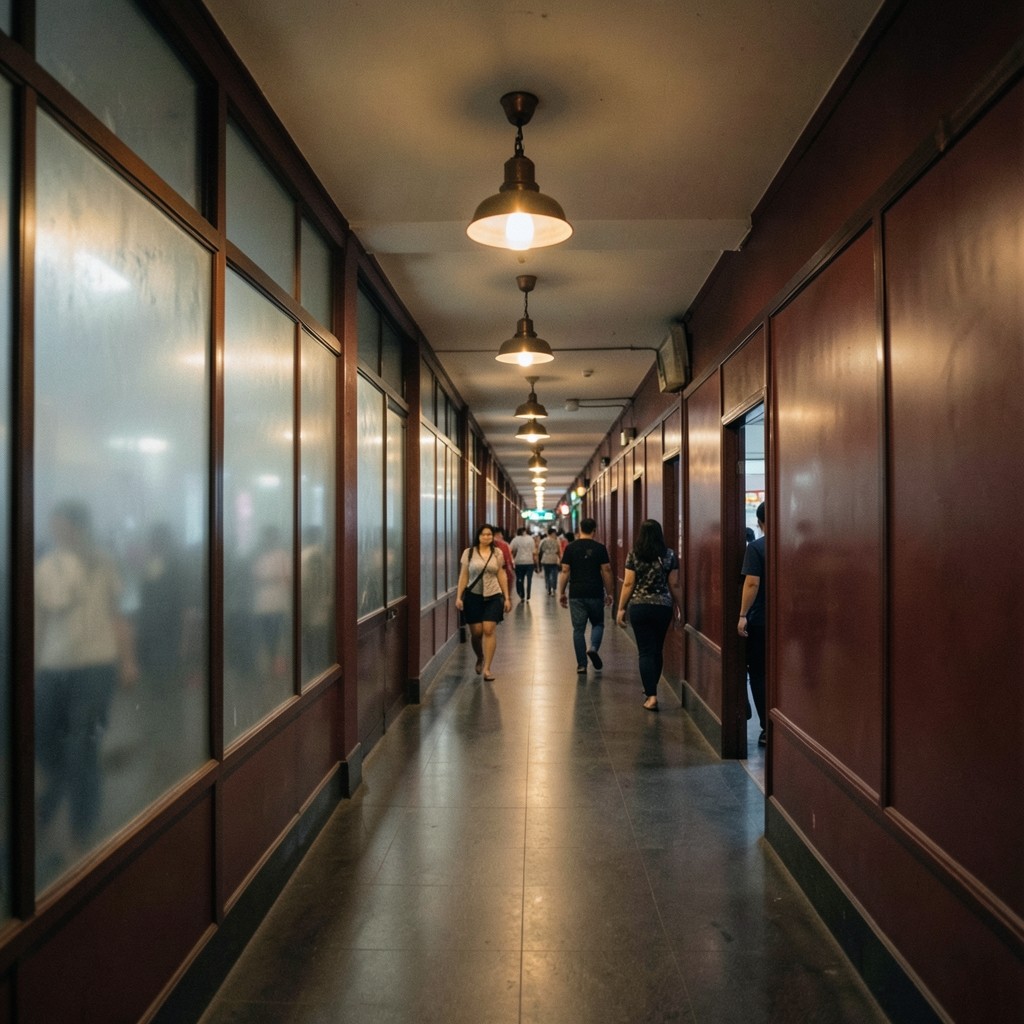
Two stations, one walk
The BTS station and the MRT station share a name in conversation and not much else on the ground. People walk between them. The walk takes long enough that a tight headway on one line and a gap on the other produce a queue that belongs to neither daily total. A briefing that says only busy interchange has not said which queue.
When we draw a corridor that passes through Asok or Sukhumvit, the transfer note is its own paragraph. It names the direction people were walking, the time of day, and whether they were going up to the elevated line or down to the underground one. Those are different stairs and different holds.
The sentence that helps
A useful sentence is specific. Evening, city-side, the stair down from the elevated platform was holding people who had already missed one underground departure. That sentence can be checked by someone who stood there. Busy cannot.
We only write it when the counts or the supervisor's log support it. A gate total at one station does not prove the path between them. If the client has no transfer count, the note says the path was described by staff and was not gated. We would rather leave a gap than invent a flow.
Siam is a different problem
Siam joins the two BTS lines in one building. The mistake there is to treat a cross-platform change and a long walk as the same movement. On Silom-side peaks, Sala Daeng has its own sharp hour that should not be averaged with Siam.
If your corridor file collapses those stations into one interchange code, tell us before we draw. We will split them back apart or we will say on the plate that the file refused the split.
Ask about a corridor, or return to the journal.